Buy Now, Pay Later... for Groceries? Nearly a Third of Users Already Do
It started as a way to split up a couch or a flight into four easy payments. Now a growing share of "buy now, pay later" users are running it through the checkout line at the grocery store — and the share doing it has roughly doubled in two years
Buy Now, Pay Later... for Groceries? Nearly a Third of Users Already Do
It started as a way to split up a couch or a flight into four easy payments. Now a growing share of "buy now, pay later" users are running it through the checkout line at the grocery store — and the share doing it has roughly doubled in two years
In partnership with

Speak naturally. Send without fixing.

Wispr Flow turns your voice into clean, professional text you can send the moment you stop talking. Not rough transcription you have to clean up. Actual polished text — ready for email, Slack, or any app.
Speak the way you think. Go on tangents. Change your mind mid-sentence. Flow strips the filler, fixes the grammar, and gives you text that reads like you spent five minutes writing it.
89% of messages sent with zero edits. Millions of professionals use Flow daily, including teams at OpenAI, Vercel, and Clay. Works on Mac, Windows, and iPhone.
Buy Now, Pay Later... for Groceries? Nearly a Third of Users Already Do.
It started as a way to split up a couch or a flight into four easy payments. Now a growing share of "buy now, pay later" users are running it through the checkout line at the grocery store — and the share doing it has roughly doubled in two years.
Buy now, pay later services — Klarna, Affirm, Afterpay, and the rest — built their reputation on splitting up purchases people wanted but didn't need immediately: a couch, a flight to Cabo, a new laptop. Four payments, six weeks, often no interest. The pitch was flexibility for discretionary spending, not a lifeline for necessities.
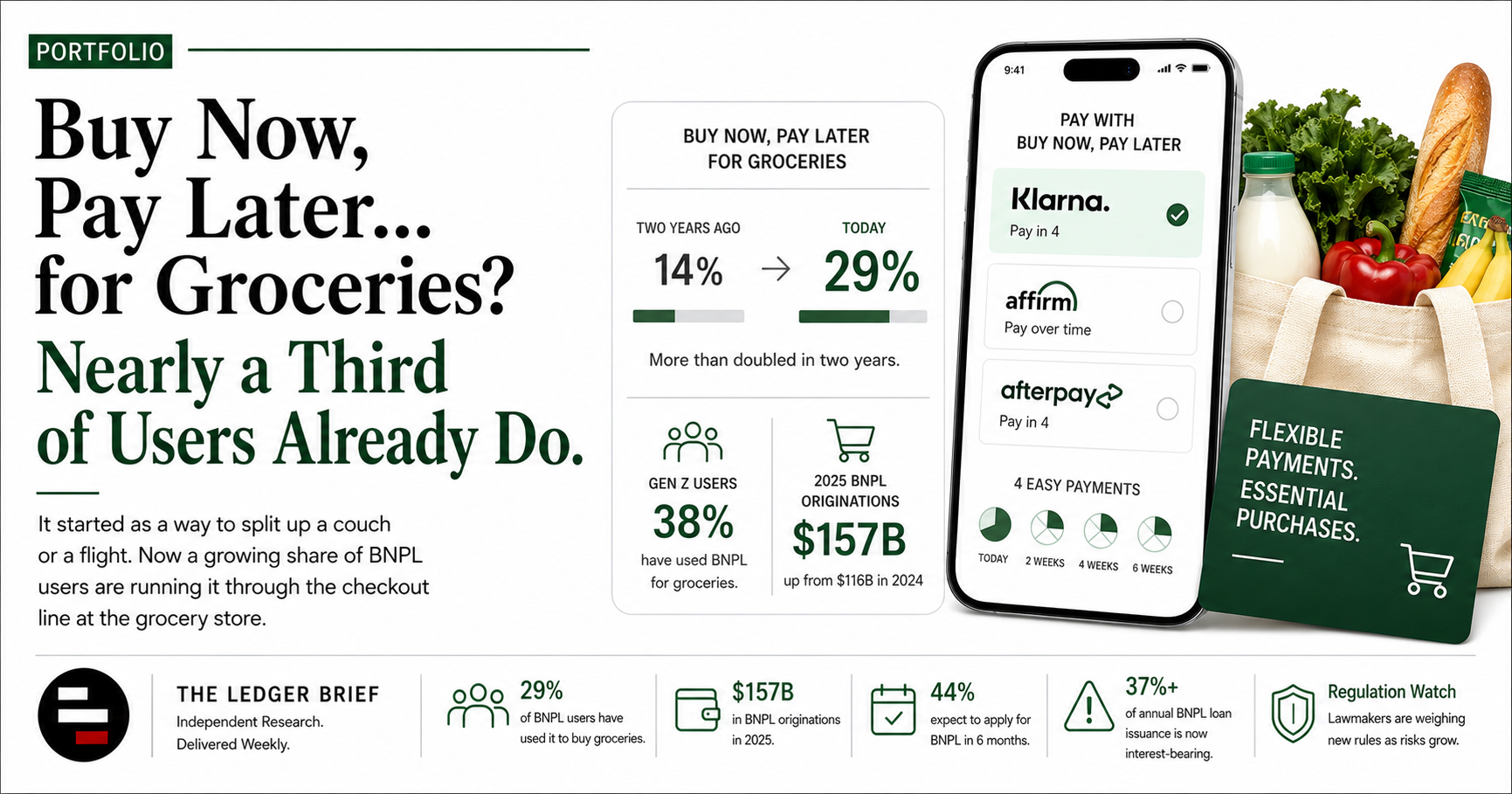
That's not entirely how it's being used anymore. According to LendingTree's 2026 survey, 29% of BNPL users have used the loans specifically to buy groceries — up from just 14% two years earlier, more than double in a short window. Among Gen Z users specifically, the share climbs to 38%. This isn't a fringe use case anymore. It's approaching one in three.
The person behind the statistic
LendingTree's survey data gets a face in the reporting around it: Cody Bortle, a teacher, described covering bills as having become progressively more difficult — car payments, groceries, and rent all climbing at once, his rent alone jumping $150 a month recently. He maxed out $15,000 in credit cards and now uses BNPL microloans to cover some expenses, including a trip to visit family. "I never imagined I'd be in my professional career as a teacher, just paycheck to paycheck," he said. He's since connected with a debt management service and is on track to pay off his cards by 2030.
His situation isn't presented as an outlier in the coverage — it's presented as increasingly representative. Lindsay Emerson, another BNPL user quoted separately, described using the payment plans for internet bills, utility bills, and new tires: "It helps you stay within your budget because these days money is tight. You don't have a big lump sum you can just drop on your tires or an internet bill."
When a payment plan built for optional purchases starts covering unavoidable ones, that's not a product finding a new market. That's a signal about the state of household cash flow.
By the numbers
Of BNPL users have used it to buy groceries, up from 14% two years ago.
Of Gen Z BNPL users specifically have used it for groceries.
In BNPL originations in 2025, up from $116B in 2024.
Have used BNPL to pay rent; 15% for medical, dental, or veterinary bills.
Of annual BNPL loan issuance is now interest-bearing.
Of Americans expect to apply for a BNPL loan in the next six months.
| 14% |
Why this matters more than a single spending-habit shift
The concern researchers and consumer advocates raise isn't really about BNPL as a product existing at all — split-pay plans for discretionary purchases are a reasonably benign financial tool when used as originally designed. The concern is about what it signals when the same tool starts absorbing recurring, unavoidable expenses. A missed BNPL payment on a couch is an inconvenience. A missed BNPL payment on this month's groceries, layered on top of last month's groceries still being paid off, starts to resemble the kind of revolving-debt spiral that BNPL was originally marketed as an alternative to.
The Consumer Financial Protection Bureau's own research backs up that concern with data: BNPL users tend to have riskier credit profiles on average than non-users, and frequently carry multiple BNPL loans simultaneously across different providers — a pattern that's hard for any single lender to see, since each provider only has visibility into its own loans, not a borrower's total BNPL exposure across all of them combined.
The late-fee mechanics that make this worse than it first appears
BNPL's core pitch — often interest-free if paid on schedule — looks genuinely benign on paper. The trouble shows up at the edges. Late fees on some BNPL services run $7 to $8 per missed payment, and when interest and financing fees are added on top for the increasing share of loans that carry them, the effective cost can work out to the equivalent of 100% APR or more once the fees stack, according to research from the nonprofit Protect Borrowers. That's a materially different product than the interest-free four-payment plan being advertised, once a borrower who's already stretched thin misses even one payment.
What this means for your portfolio
For investors in BNPL providers and the banks partnering with them, the shift toward essential-spending use cases is worth separating into its good and bad implications rather than reading as uniformly positive or negative. On one hand, essentials-based usage is genuinely stickier and more recurring than one-off discretionary purchases — grocery spending happens every week, not once a year, which is attractive from a transaction-volume standpoint. On the other hand, users borrowing for groceries because they can't otherwise afford them are a meaningfully higher credit-risk population than users splitting up a vacation purchase out of preference rather than necessity, and that risk shows up eventually in default rates, not immediately in transaction volume.
Regulatory risk is the other side worth tracking closely. BNPL has faced considerably less regulatory scrutiny than traditional credit cards to date, but that gap is closing — federal lawmakers are actively weighing new rules specifically because of the essentials-spending shift documented here. A regulatory framework that starts treating BNPL more like a credit card, with corresponding disclosure and underwriting requirements, would meaningfully change the unit economics that have made these providers attractive to public-market investors.
What we're watching next
Whether BNPL default and late-payment rates climb in tandem with the essentials-spending share, which would confirm the CFPB's risk-profile concern with real repayment data rather than survey responses alone. LendingTree's own tracking already shows nearly half of BNPL users reporting a late payment in the past year — up for a second straight year — which is the number worth watching most closely as this shift toward essential spending continues.
Sources
1. CNBC — “Consumers turn to buy now, pay later for essential expenses — with growing risks”
2. NewsNation — “More Americans are using buy now, pay later for groceries as late payments rise” (LendingTree survey)
3. PYMNTS — “Buy Now, Pay Later Moves to Groceries, Utilities and Travel”
4. AZFamily — “Buy now, pay later services increasingly used for groceries and essentials”
Illustrative figures and third-party research cited above; not investment or credit advice.
Slack replies in seconds. Not minutes.
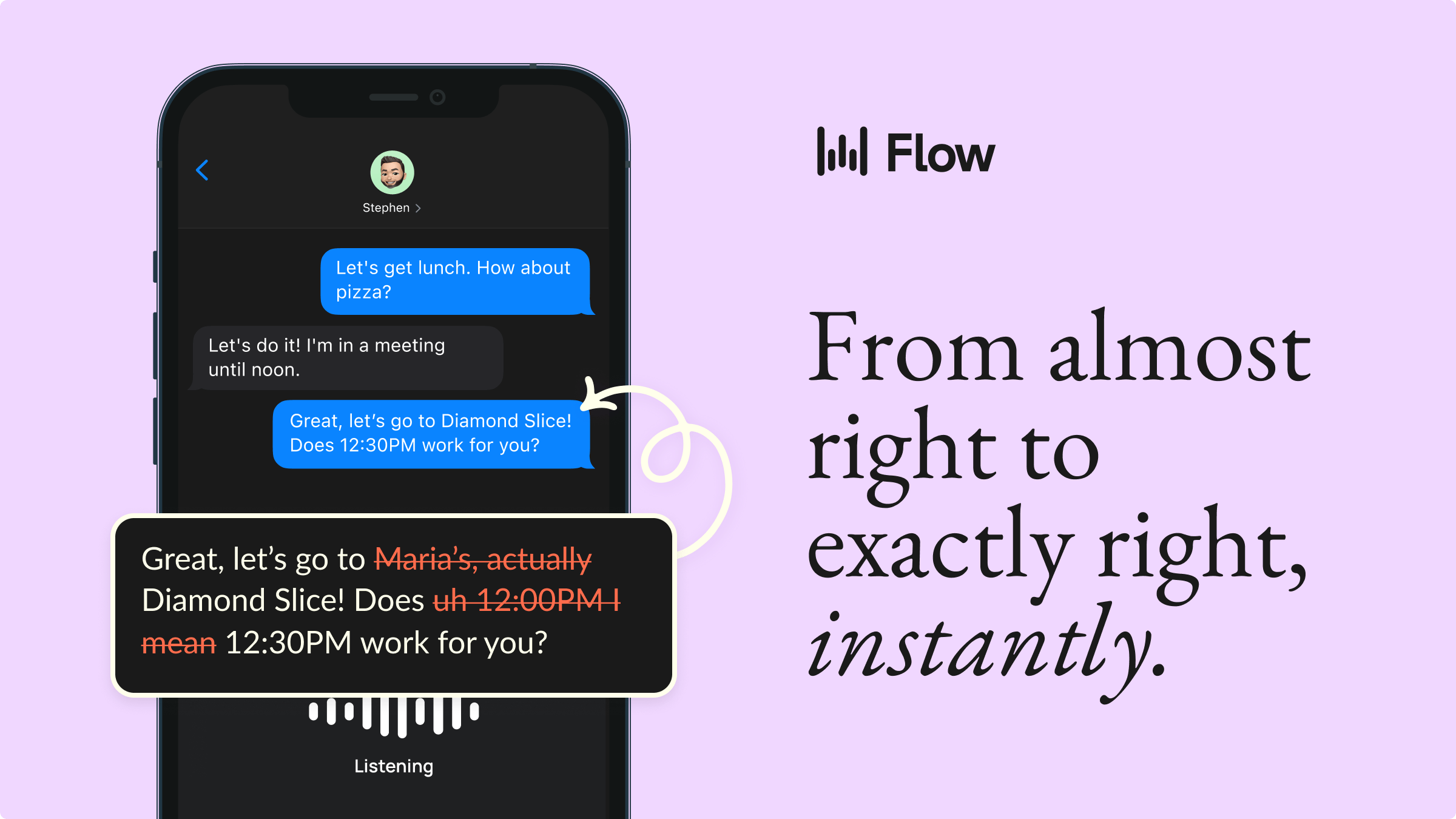
Dictate into Slack, email, LinkedIn, or any app and get polished, send-ready text. Wispr Flow strips filler and formats everything. 89% of messages sent with zero edits. Works on Mac, Windows, and iPhone.